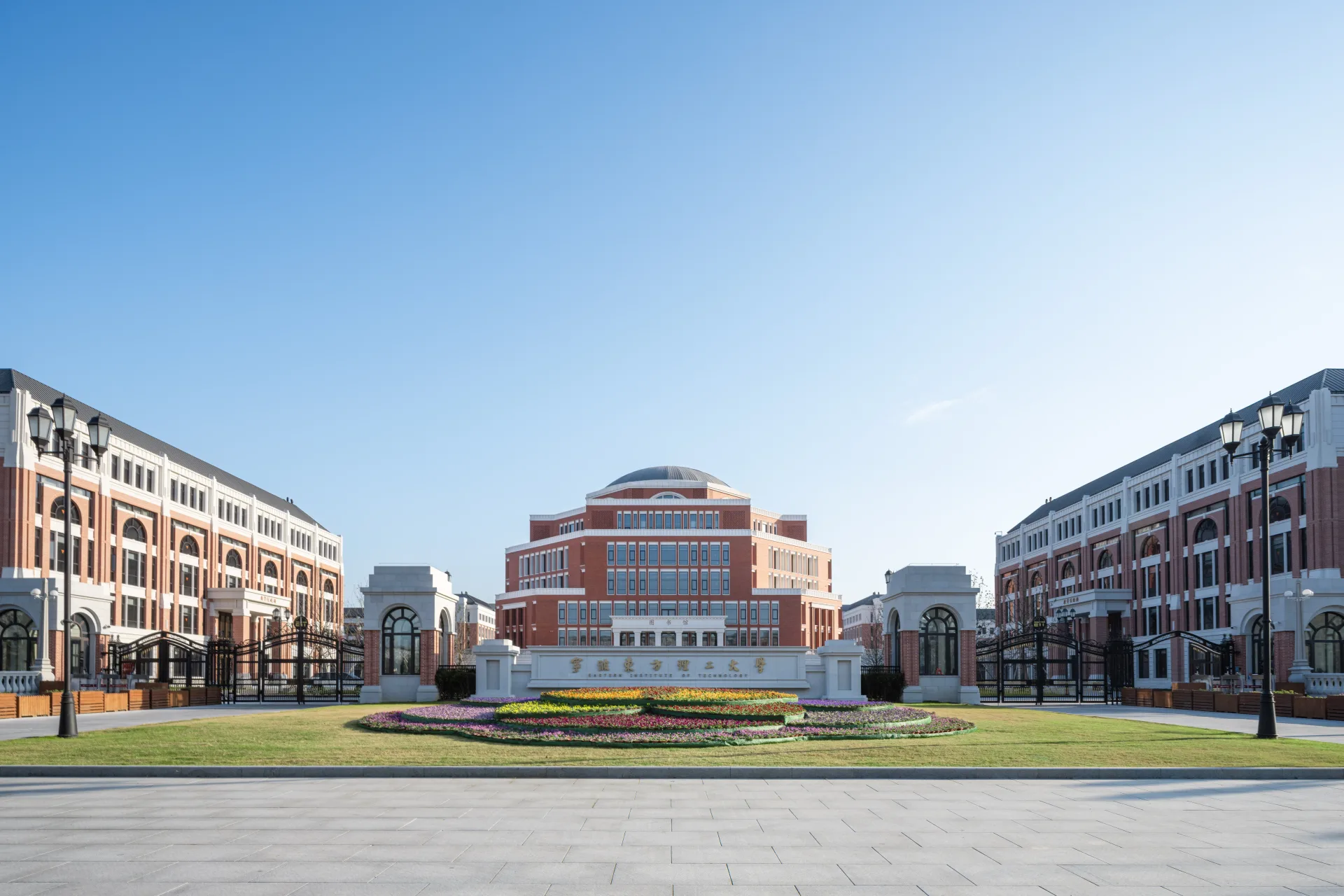

Eastern Institute of Technology Ningbo
Curriculum for the Program of Intelligent Manufacturing Engineering 2025
1 Introduction to the Program
The Program of Intelligent Manufacturing Engineering addresses the strategic priorities of China's manufacturing transformation and upgrading and cultivates innovative talent with strong interdisciplinary capabilities. The program awards a four-year Bachelor of Engineering degree. It builds on strengths in mechanics and mechanical engineering and integrates advanced manufacturing, information technology, and artificial intelligence. Core courses span intelligent manufacturing systems, industrial robotics, sensing technologies, machine learning, and artificial intelligence, with strong emphasis on engineering analysis and hands-on skills. Distinctive features include a 1+3 general-to-specialty training model, integrated undergraduate-to-graduate research pathways, and summer internships. Students have access to high-performance computing and advanced manufacturing facilities and benefit from partnerships with leading manufacturing enterprises. Graduates may contribute to the intelligent upgrading of machinery, automotive, electronics, and other advanced industries, undertake research and development, or pursue master's and doctoral study.
2 Program Objective
This program supports the national goal of high-level technological self-reliance and innovation. It cultivates top-tier talent with a solid theoretical foundation, strong engineering practice, and creative problem-solving abilities. Expected achievements approximately five years after graduation include:
1 Demonstrate national commitment and global vision, sound professional ethics, social responsibility, leadership, resilience, and a sustained pursuit of excellence.
2 Possess a solid foundation in mathematics, physics, chemistry, and information science, together with disciplinary and interdisciplinary knowledge in Intelligent Manufacturing; demonstrate competence in high-level innovation and solving complex engineering problems.
3 Exhibit critical thinking, creative problem-solving and engineering awareness, strong communication and teamwork capabilities, and a lifelong-learning mindset.
3 Graduate Outcomes
1 Science and Engineering Knowledge: Master mathematics, physics, chemistry, computer science, and foundational engineering science; possess practical Intelligent Manufacturing skills and solve complex scientific and engineering problems.
2 Problem Analysis: Apply scientific principles, engineering knowledge, mathematical and computational tools, and literature research to analyze complex Intelligent Manufacturing problems and identify key factors with due regard to sustainability.
3 Design and Development of Solutions: Design innovative systems and processes while considering health, safety, environment, life-cycle cost, net-zero carbon requirements, law, ethics, society, and culture.
4 Research: Apply scientific principles and methods to investigate complex problems, design experiments, analyze and interpret data, and draw valid conclusions through information synthesis.
5 Modern Tool Usage: Select and use modern engineering and information technology tools to test, analyze, and simulate Intelligent Manufacturing systems, while understanding tool characteristics and limitations.
6 Engineering and Sustainable Development: Assess the effects of engineering practice and research on health, safety, environment, law, and sustainable economic and social development, and undertake corresponding responsibilities.
7 Engineering Ethics and Professional Norms: Uphold professional ethics, social responsibility, relevant policies, laws, regulations, and industry standards in engineering practice.
8 Individual and Teamwork: Work effectively in diverse interdisciplinary teams, assume different roles, demonstrate leadership, establish shared goals, and build an inclusive working environment.
9 Communication: Communicate effectively with peers and the public on academic and complex engineering issues in cross-cultural contexts through reports, presentations, and oral communication, while respecting linguistic and cultural differences.
10 Project Management: Apply project management and economic decision-making principles to analyze, evaluate, and manage Intelligent Manufacturing projects.
11 Lifelong Learning: Maintain self-directed and lifelong-learning capabilities, acquire new knowledge and skills, understand the impact of technological change, and adapt to new developments.
4 Program Highlights
The program combines hands-on practice with artificial-intelligence-assisted teaching to foster self-directed learning, knowledge integration, and innovative problem-solving. It emphasizes digital intelligence and develops professionals with critical thinking and global perspectives.
1 Emphasis on General Education: The university adopts a 1+3 curriculum structure. Students build foundations in mathematics, physics, chemistry, computing, science, technology, and the humanities before selecting a major.
2 Residential College Model: A residential college and mentorship system supports holistic education and develops communication, teamwork, leadership, and personal growth.
3 Integrated Undergraduate and Graduate Pathways: Academic advisers support early participation in research, and the year-long Innovation Practice and Capstone Project is integrated with faculty research.
4 Enhanced Scientific and Industrial Practice: Compulsory summer practice modules and project-based learning connect students with research institutes and enterprises.
5 Global Competence Development: Bilingual major courses and international exchanges leverage the program's globally oriented faculty.
6 Artificial Intelligence for Education: Artificial intelligence tools enhance teaching and learning efficiency and support independent learning with digital resources.
5 Program Duration and Degree Awarded
Program Duration: The standard duration is four years under a credit-based system, with a maximum study period of six years.
Degree Awarded: Students who complete the program and meet the degree requirements are awarded the Bachelor of Engineering degree.
6 Credit Requirements for Graduation
A minimum of 156 credits is required for graduation. The curriculum structure is shown below.
Module | Category | Requirement | Credits |
|---|---|---|---|
General and Foundational Module | General Education Required Courses | Required | 19 |
General and Foundational Module | Fundamental Science and Engineering Courses | Required | 32 |
General and Foundational Module | General Education Elective Courses | Elective | 8 |
Major-specific Module | Discipline-specific Foundational Module | Required | 27 |
Major-specific Module | Major Core Courses | Required | 18 |
Major-specific Module | Major Elective Courses | Elective | 10 |
Intensive Practical Training | Summer Internships | Required | 12 (24 weeks) |
Intensive Practical Training | Capstone Project | Required | 8 (32 weeks) |
Graduation Credit Requirement | 156 | ||
7 Core Courses
Manufacturing and CAM, Measurement Sensing and Data Processing, Machine Learning and Applications, Intelligent Manufacturing and Industrial Systems, Intelligent Manufacturing and Information Systems, and Industrial Robots.
8 Practical Training Activities and Major Experiments
Practical training includes Summer Internship I, Summer Internship II, Summer Internship III, the Capstone Project, and undergraduate academic and innovation competitions. Students join faculty mentor teams upon enrollment for early research exposure, which may be integrated with summer internships and the Capstone Project.
Courses containing major experiments include Engineering Materials, Engineering Drawing and Computer-aided Design, Electrical and Electronic Engineering, Fundamentals of Thermodynamics and Heat Transfer, Principles and Design of Machinery, Control Theory, Manufacturing and CAM, Measurement Sensing and Data Processing, and Industrial Robots.
9 Course Structure and Requirements
General and Foundational Module
Ideological and Political Theory Courses
Code | Course Name | Type | Cr | Prac | Hrs | Prerequisites | Term |
GENE1101 | Ethics and Rule of Law | Required | 3 | 1 | 3 | None | Y1/Fall |
GENE1102 | Basic Principles of Marxism | Required | 3 | 1 | 3 | None | Y1/Spring |
GENE2101 | Modern Chinese History A Survey | Required | 3 | 1 | 3 | None | Y2/Fall |
GENE2102 | Introduction to Maoism and Chinese Socialism | Required | 2 |
| 2 | None | Y2/Spring |
GENE3101 | Introduction to Xi Jinping Thought on Socialism with Chinese Characteristics for a New Era | Required | 3 | 1 | 3 | None | Y3/Fall |
GENE1103 | Society and Public Policy in Contemporary China I | Required | 0.5 |
| 0.5 | None | Y1/Fall |
GENE1104 | Society and Public Policy in Contemporary China II | Required | 0.5 |
| 0.5 | None | Y1/Spring |
GENE2103 | Society and Public Policy in Contemporary China III | Required | 0.5 |
| 0.5 | None | Y2/Fall |
GENE2104 | Society and Public Policy in Contemporary China IV | Required | 0.5 |
| 0.5 | None | Y2/Spring |
GENE3301 | Political Theory and Ideology Experiential Learning | Required | 2 | 2 | 2 | None | Y3/Fall |
GENE3302 | Practical Labor Education | Required | 1 | 1 | 2 | None | * |
Military Physical Education and Health Courses
Code | Course Name | Type | Cr | Prac | Hrs | Prerequisites | Term |
GENE1001 | Military Skills Training | Required | 2 | 2 |
| None | Summer |
GENE1002 | Military Theory and National Security Education | Required | 3 |
|
| None | Summer |
GENE1401 | Physical Education I | Required | 0.5 | 0.5 | 2 | None | Y1/Fall |
GENE1402 | Physical Education II | Required | 0.5 | 0.5 | 2 | None | Y1/Spring |
GENE2401 | Physical Education III | Required | 0.5 | 0.5 | 2 | None | Y2/Fall |
GENE2402 | Physical Education IV | Required | 0.5 | 0.5 | 2 | None | Y2/Spring |
GENE3401 | Physical Education V | Required | 0.5 | 0.5 | 2 | None | Y3/Fall |
GENE3402 | Physical Education VI | Required | 0.5 | 0.5 | 2 | None | Y3/Spring |
Language and Communication Skills Courses
Code | Course Name | Type | Cr | Prac | Hrs | Prerequisites | Term |
LC1501 | General Academic English I-A | Required | 3 |
| 4 | None | Y1/Fall |
LC1502 | General Academic English II-A | Required | 3 |
| 4 | LC1501 | Y1/Spring |
LC2501 | General Academic English III-A | Required | 3 |
| 4 | LC1502 | Y2/Fall |
LC1503 | General Academic English I-B | Required | 3 |
| 4 | None | Y1/Fall |
LC1504 | General Academic English II-B | Required | 3 |
| 4 | LC1503 | Y1/Spring |
LC2502 | General Academic English III-B | Required | 3 |
| 4 | LC1504 | Y2/Fall |
LC1505 | General Academic English I-C | Required | 3 |
| 4 | None | Y1/Fall |
LC1506 | General Academic English II-C | Required | 3 |
| 4 | LC1505 | Y1/Spring |
LC2503 | General Academic English III-C | Required | 3 |
| 4 | LC1506 | Y2/Fall |
LC2504 | Academic Writing and Presentation | Required | 3 |
| 4 | LC2501/LC2502/LC2503 | Y2/Spring |
Fundamental Science and Engineering Courses
Code | Course Name | Type | Cr | Prac | Hrs | Prerequisites | Term |
MATH1101 | Calculus I | Required | 4 |
| 5 | None | Y1/Fall |
MATH1102 | Calculus II | Required | 4 |
| 5 | MATH1101 | Y1/Spring |
MATH1103 | Linear Algebra | Required | 3 |
| 4 | None | Y1/Fall |
MATH2101 | Probability Theory and Mathematical Statistics | Required | 3 |
| 3 | MATH1102 | Y2/Fall |
PHYS1101 | General Physics I | Required | 4 |
| 4 | None | Y1/Fall |
PHYS1102 | General Physics II | Required | 4 |
| 4 | PHYS1101 | Y1/Spring |
PHYS1301 | General Physics Experiments I | Required | 1 | 1 | 2 | None | Y1/Fall |
PHYS1302 | General Physics Experiments II | Required | 1 | 1 | 2 | PHYS1301 | Y1/Spring |
CHEM1101 | General Chemistry | Required | 3 |
| 3 | None | Y1/Fall |
CS1001 | Introduction to Artificial Intelligence | Required | 2 |
| 2 | None | Y1/Fall |
CS1101 | Fundamentals of Python Programming | Required | 3 |
| 3 | None | Y1/Spring |
Discipline-specific Foundational Module
Code | Course Name | Type | Cr | Prac | Hrs | Prerequisites | Term |
ME2201 | Theoretical Mechanics | Required | 3 |
| 3 | MATH1102/PHYS1101 | Y2/Fall |
ME2202 | Engineering Materials | Required | 2 |
| 2 | CHEM1101/PHYS1101 | Y2/Fall |
ME2301 | Engineering Drawing and Computer-aided Design | Required | 2 | 1 | 2 | None | Y2/Fall |
ME2302 | Electrical and Electronic Engineering | Required | 4 | 2 | 4 | PHYS1102/MATH1102 | Y2/Fall |
ME2203 | Mechanics of Materials and Structures | Required | 3 |
| 3 | PHYS1102 | Y2/Spring |
ME2204 | Numerical Methods for Engineering Science | Required | 2 |
| 2 | CS1101/MATH1102/MATH1103 | Y2/Spring |
ME2205 | Fluid Mechanics | Required | 2 |
| 2 | ME2201 | Y2/Spring |
ME2206 | Fundamentals of Thermodynamics and Heat Transfer | Required | 2 |
| 2 | PHYS1101 | Y2/Spring |
ME2303 | Principles and Design of Machinery | Required | 4 | 1 | 4 | ME2201/ME2202/ME2301 | Y2/Spring |
EE3602 | Control Theory | Required | 3 | 1 | 3 | MATH1102 | Y3/Fall |
Major Core Courses
Code | Course Name | Type | Cr | Prac | Hrs | Prerequisites | Term |
ME3301 | Measurement Sensing and Data Processing | Required | 3 | 1 | 3 | ME2302 | Y3/Fall |
ME3302 | Manufacturing and CAM | Required | 4 | 1 | 4 | ME2303 | Y3/Fall |
ME3303 | Machine Learning and Applications | Required | 2 |
| 2 | CS1101 | Y3/Fall |
ME3304 | Intelligent Manufacturing and Industrial Systems | Required | 3 |
| 3 | ME3302 | Y3/Spring |
ME3305 | Intelligent Manufacturing and Information Systems | Required | 3 |
| 3 | EE3602 | Y3/Spring |
ME3306 | Industrial Robots | Required | 3 | 2 | 3 | MATH1102/PHYS1101/EE3602 | Y3/Spring |
Major Elective Courses
Code | Course Name | Type | Cr | Prac | Hrs | Prerequisites | Term |
ME1001 | Digitalization and Intelligent Manufacturing | Elective | 1 |
| 1 | None | Y1/Spring |
ME3001 | Engineering Economics | Elective | 2 |
| 2 | None | Y3/Fall |
ME3002 | Engineering Ethics | Elective | 2 |
| 2 | None | Y3/Fall |
ME3201 | Micro and Nano-Fabrication | Elective | 2 | 1 | 2 | PHYS1102/CHEM1101 | Y3/Spring |
ME3601 | Additive Manufacturing | Elective | 2 | 1 | 2 | ME3302 | Y3/Spring |
ME3003 | Project and Quality Management | Elective | 2 |
| 2 | None | Y3/Spring |
CS3505 | Internet of Things | Elective | 3 | 1 | 3 | CS2204 | Y3/Spring |
ME3801 | Vibration and Acoustics | Elective | 2 | 1 | 2 | ME2201/ME2205 | Y3/Spring |
ME4501 | Virtual Engineering Technology | Elective | 3 |
| 3 | ME2204 | Y4/Fall |
ME4801 | Dynamics and Control | Elective | 3 |
| 3 | EE3602 | Y4/Fall |
ME4601 | Specialized Machining | Elective | 2 | 1 | 2 | ME3302 | Y4/Fall |
ME4602 | Precision Metrology | Elective | 2 | 1 | 2 | ME3301 | Y4/Fall |
CS3502 | Computer Vision | Elective | 3 | 1 | 3 | CS2201 | Y4/Fall |
CS4502 | Virtual Reality | Elective | 3 | 1 | 3 | CS3502 | Y4/Fall |
CS3503 | Digital Twin | Elective | 3 | 1 | 3 | CS3501 | Y4/Spring |