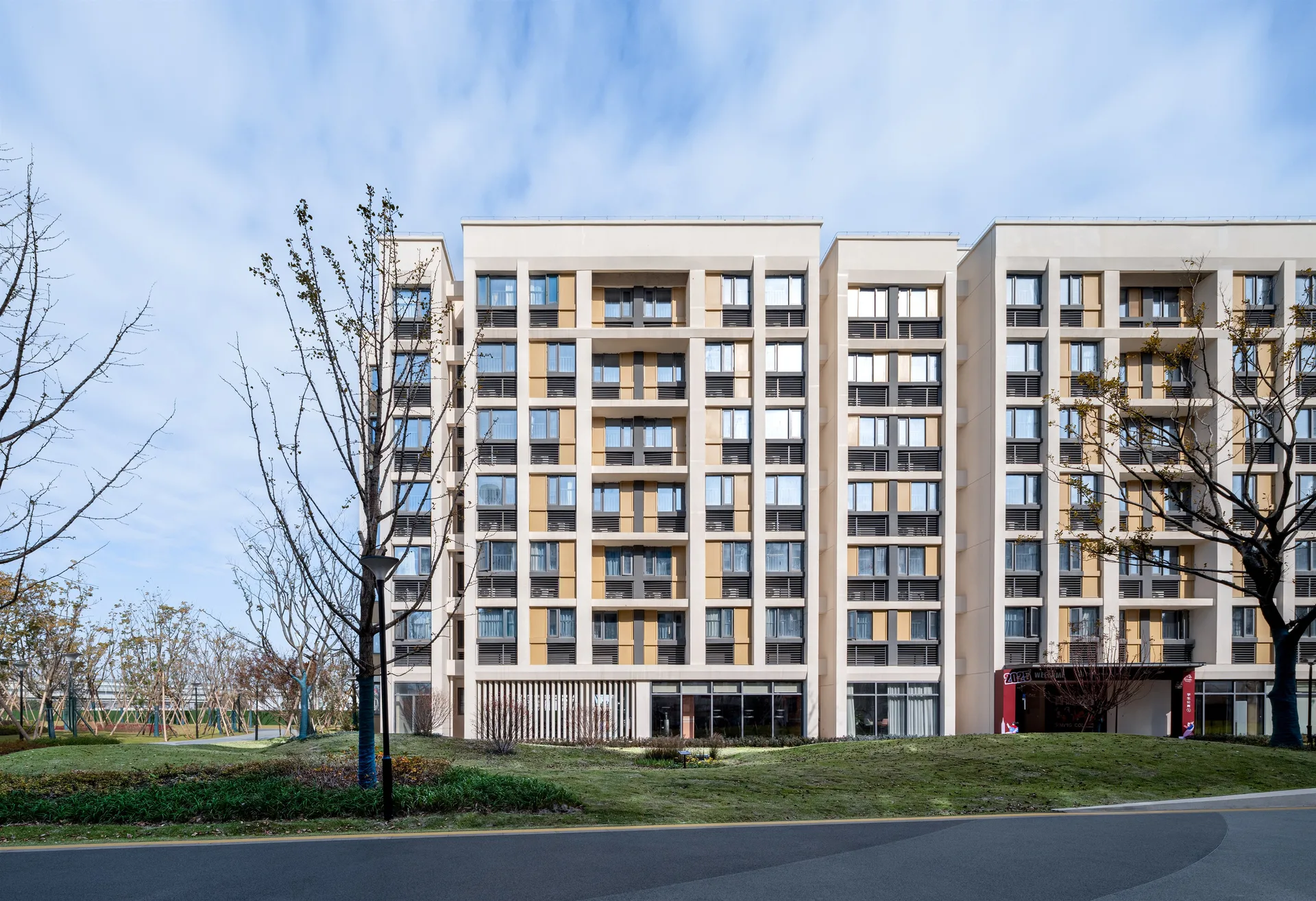

To help students deepen their understanding of Intelligent Manufacturing Engineering after choosing their major and clarify the direction of their subsequent studies, the School of Mechanical Engineering and Mechanics held its first faculty–student meeting for the 2025 undergraduate cohort in Intelligent Manufacturing Engineering at 10 a.m. today. Faculty members and students in the cohort gathered to discuss their studies and future development.
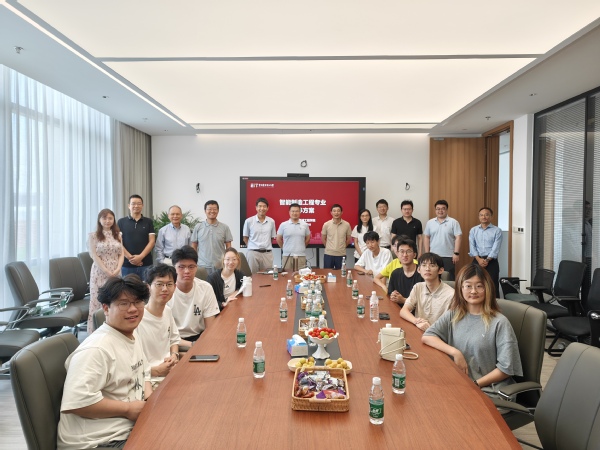
Faculty and students sat together in a warm and welcoming atmosphere. The event began with everyone introducing themselves in turn. Faculty members described their research interests and teaching areas, while students shared their interests, strengths, and expectations for studying the major. These face-to-face conversations brought faculty and students closer together and laid a sound foundation for future academic guidance and discussions about personal development.
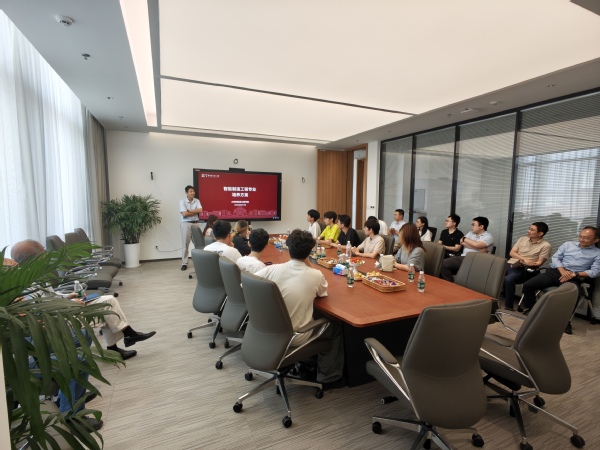
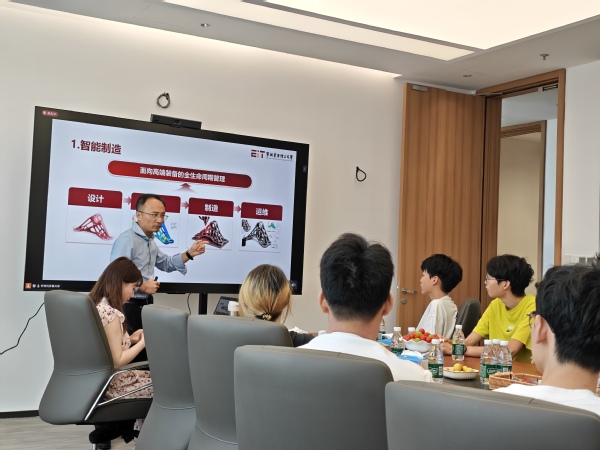
Professor Yifan Zhao, Associate Dean for Teaching, gave a detailed introduction to the curriculum for the 2025 Intelligent Manufacturing Engineering cohort. With reference to the national strategy to build a manufacturing powerhouse and the needs of regional industrial upgrading, he outlined the program’s emphasis on integrating frontier developments, strengthening practical training, and connecting education with research. He explained its technical progression of design–simulation–manufacturing–operations and maintenance, enhanced by AI, and its staged educational pathway from general education through disciplinary foundations and core courses to practical innovation. He encouraged students to build strong foundations in mathematics and physics, mechanical engineering, and information technology; continually strengthen their engineering competence and capacity for innovation through coursework, experiments, practical work, and research; and plan their studies and personal development thoughtfully.
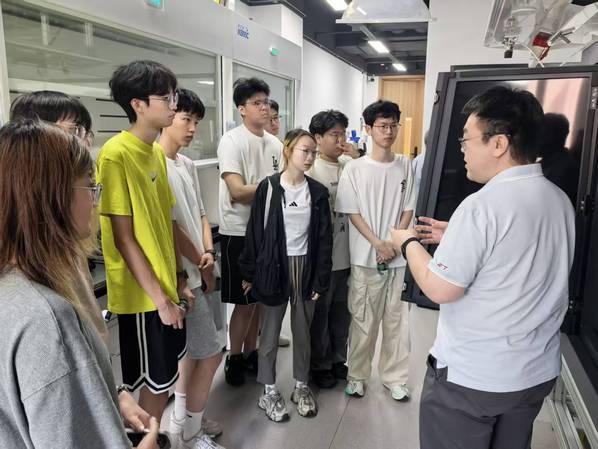
Faculty members then took the students to the laboratories of Xiaolong Yin, Bing Han, and Tianhao Wu. In these working research environments, faculty explained the advanced equipment, its functions, and the associated research directions in detail. Students listened attentively, paused to observe, and discussed their questions with the faculty. The close-up visits gave them a more direct and deeper understanding of the practical character and research dimensions of Intelligent Manufacturing Engineering.
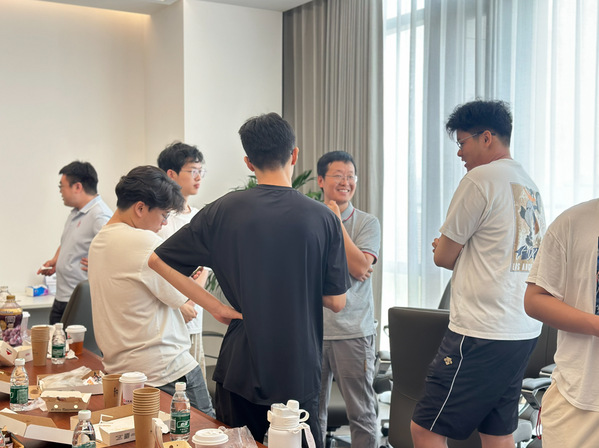
At noon, faculty and students continued their conversations over a relaxed and enjoyable lunch. Gathered around a long table, they shared pizza and fruit while discussing coursework, laboratory practice, research participation, and career development. The friendly interaction added warmth to the academic discussions and allowed students to experience the care and vitality of the School community.
The meeting offered both an in-depth explanation of the curriculum and an immersive opportunity to get to know the laboratories, faculty, and major. The School will continue improving its approach to disciplinary education and student development guidance, helping students build solid foundations, explore boldly, and develop comprehensively in intelligent manufacturing.