

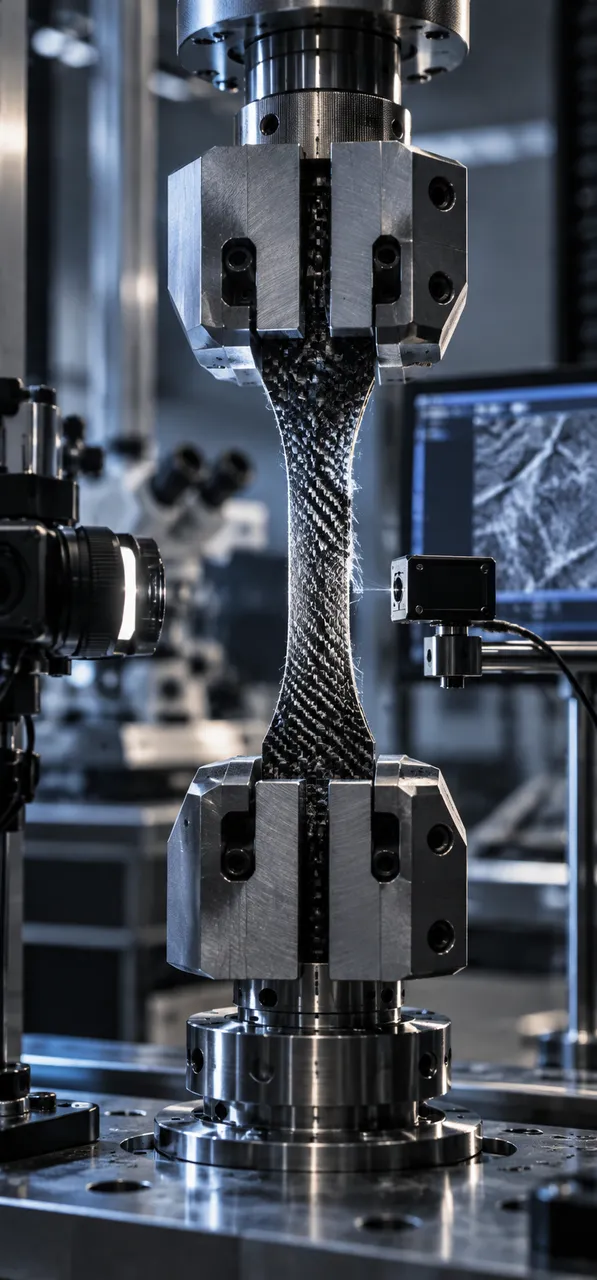
How to design future engineering materials from microscopic mechanisms?
Material properties originate from multiscale structures and their evolution. Starting from solid mechanics, fracture mechanics, soft matter, interfacial mechanics, and micro/nanoscale characterization, the school investigates the intrinsic connections between microstructures and macroscopic properties, and further explores novel functional materials and structures endowed with sensing, responsiveness, adhesion, deformation, and adaptive capabilities. Hong Wei’s research spans solid and fracture mechanics, soft matter, interfacial adhesion, and flexible electronics; Kun Xia focuses on material failure, soft materials, soft robotics, and mechanobiology; Bing Han investigates micro/nanoscale interfaces and energy devices; Meifeng Li concentrates on corrosion, high-temperature alloys, and advanced coatings.
Why it matters
Materials required for next-generation robots, flexible electronics, energy equipment, and extreme-environment equipment are no longer merely “stronger” and “lighter,” but must also adapt to their environment, withstand complex loads, and generate functional responses. Understanding the interplay among structure—processing—properties is key to transitioning from material discovery to active material design.
Topic
Soft Materials & Adaptive Structures
Our contributions
- Investigating the mechanical behavior of polymer networks, soft materials, and flexible structures, and how microscopic network architectures govern stiffness, toughness, adhesion, and multi-physics responses. Recently, the Hong group has developed scaling theories and swelling models for hydrogel properties based on polymer network architecture, revealing novel toughening mechanisms. Kun Xia has further extended soft-matter mechanics to soft robotics, biosensing, and intelligent adhesion.
Application areas
- Soft robotics
- flexible electronics
- wearable devices
- biomedical instruments
- intelligent adhesion
- soft-material actuators
Related people


Material Failure & Extreme-Service Mechanics
Our contributions
- Investigating material failure and lifetime evolution mechanisms from the perspectives of cracks, defects, interfaces, and environmental effects. Xia Kun has long focused on material fracture and mechanical behavior at micro- and nanoscales; Hong Wei concentrates on fracture, dielectric breakdown, and interfacial failure; Li Meifeng extends this direction to high-temperature oxidation, electrochemical corrosion, corrosion in H₂/CO₂ environments, high-temperature materials, and high-entropy alloys, integrating first-principles calculations, molecular dynamics, and high-throughput computing to study material service behavior.
Application areas
- Aerospace
- energy equipment
- hydrogen energy systems
- marine engineering
- high-temperature equipment
- life prediction and protection of advanced structural materials

Micro/Nano Interfaces & Functional Materials
Our contributions
- Investigating the relationships among interfacial structures, fabrication processes, and material functionalities at micro- and nanoscales. Bing Han has developed ultra-low-dose cryo-electron microscopy and multidimensional imaging techniques, which have been applied to reveal the dynamic evolution of interfaces in energy devices such as perovskite solar cells, alkali-metal batteries, and lithium-metal solid-electrolyte interphases (SEI). Zhongchao Tan focuses on research spanning from materials to engineering translation, centered on nanofibers, catalysts, carbon materials, and their associated fabrication processes.
Application areas
- Energy devices
- micro/nanodevices
- advanced carbon materials
- functional coatings
- catalytic materials
- flexible and sensitive electronic devices