
How to understand cross-scale evolutionary laws in complex systems?
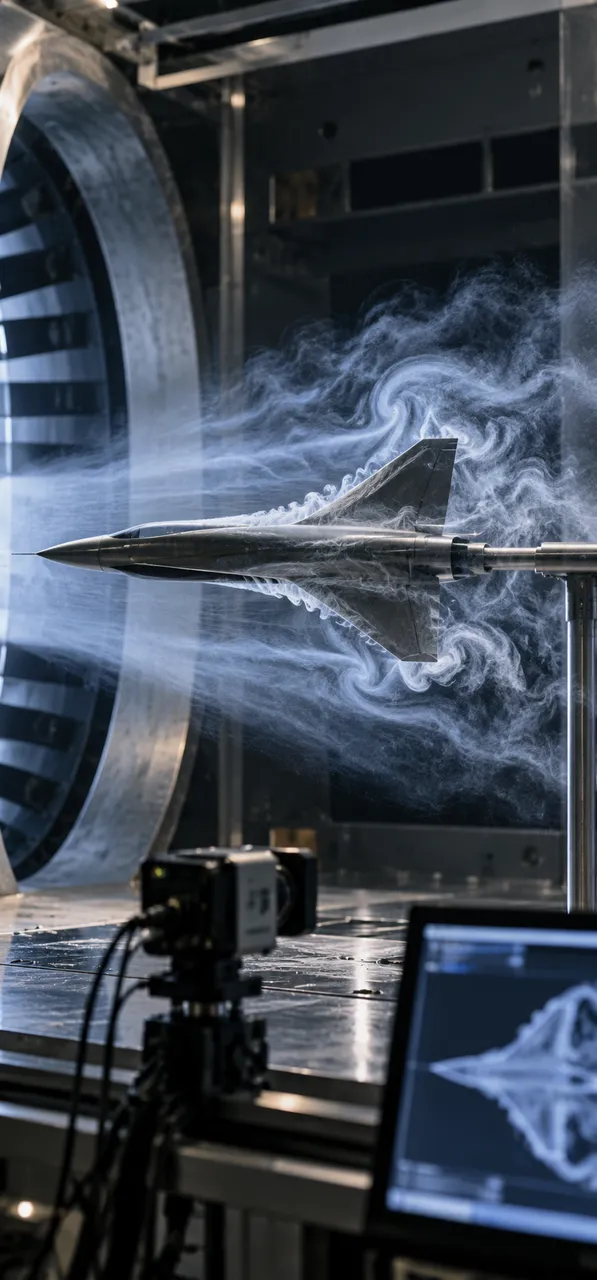
From turbulence, multiphase flows, and porous media to fluid–structure interaction, acoustic fields, and multi-physics systems, complex engineering problems often span multiple temporal and spatial scales. Focusing on nonlinear dynamics, scale transfer, and multi-field coupling mechanisms in complex systems, the school develops theoretical analysis, high-fidelity numerical simulation, experimental observation, and reduced-order modeling methods—establishing a mechanical foundation that bridges fundamental physical laws with prediction and control of complex engineering systems.
Why it matters
Many performance limits in aerospace, deep-sea equipment, energy development, carbon sequestration, and advanced manufacturing are fundamentally determined by complex flows and their cross-scale couplings. Understanding these processes is not merely about “computing systems more accurately”; more importantly, it requires establishing foundational theories capable of predicting, designing, and even actively controlling complex engineering systems.
Topic
Turbulence & Multiscale Flow Dynamics
Our contributions
- Focusing on scale transfer, coherent structures, and the evolution of complex flows in turbulence, we develop direct numerical simulation (DNS), large-eddy simulation (LES), multi-scale modeling, and data-driven methods. The Chen Shiyi group has long been developing computational fluid dynamics (CFD) methods including the lattice Boltzmann method and constrained large-eddy simulation. Zhou Yu extends fundamental turbulence research to intelligent control; his group has conducted studies on machine learning–based control of turbulent jets, boundary layer separation, and aerodynamic drag reduction. Zhang Shengqi focuses on turbulence coarse-graining, reduced-order modeling, and multiphysics flow modeling.
Application areas
- Aerospace aerodynamic design
- high-speed vehicles
- ships and underwater vehicles
- energy transport
- industrial flow control
- efficient mixing and drag reduction


Multiphase & Porous Media Flows
Our contributions
- Investigating the cross-scale transfer from pore-scale complex flow to macroscopic transport laws, and the influence of multi-component systems, multiphase interfaces, and complex medium structures on flow behavior. Dongxiao Zhang has long developed stochastic modeling, numerical computation, and machine learning methods for subsurface flow. Xiaolong Yin employs pore-scale direct numerical simulation (DNS) and microfluidic experiments to reveal microscopic flow mechanisms. Tianhao Wu further integrates micromechanical experiments, multiscale imaging, molecular simulations, and pore-to-core-scale computations to study multi-physics coupled processes.
Application areas
- CO₂ geological sequestration
- unconventional energy resources
- groundwater resources
- reservoir engineering
- chemical processes
- energy and environmental systems


Multiphysics Coupling & Aeroacoustics
Our contributions
- Addressing the complex interactions among mechanical, thermal, acoustic, rotational, electromagnetic, and structural fields, our group develops multiphysics coupled modeling, high-order numerical algorithms, and high-performance computing. The Hanbo Jiang team focuses on high-accuracy computational acoustics, fluid-acoustic coupling, and aerodynamic noise prediction methods, and conducts aerodynamic–structural–control optimization for fixed-wing, rotary-wing, and hybrid aircraft. Shengqi Zhang investigates coupling among mechanical, thermal, acoustic, rotational, and electromagnetic processes. Yu Zhou has accumulated extensive expertise in fluid–structure interaction and active control.
Application areas
- Low-altitude aircraft
- civil aviation
- aircraft engines
- deep-sea submersibles
- new-energy vehicles
- rotor noise control
- high-end equipment